
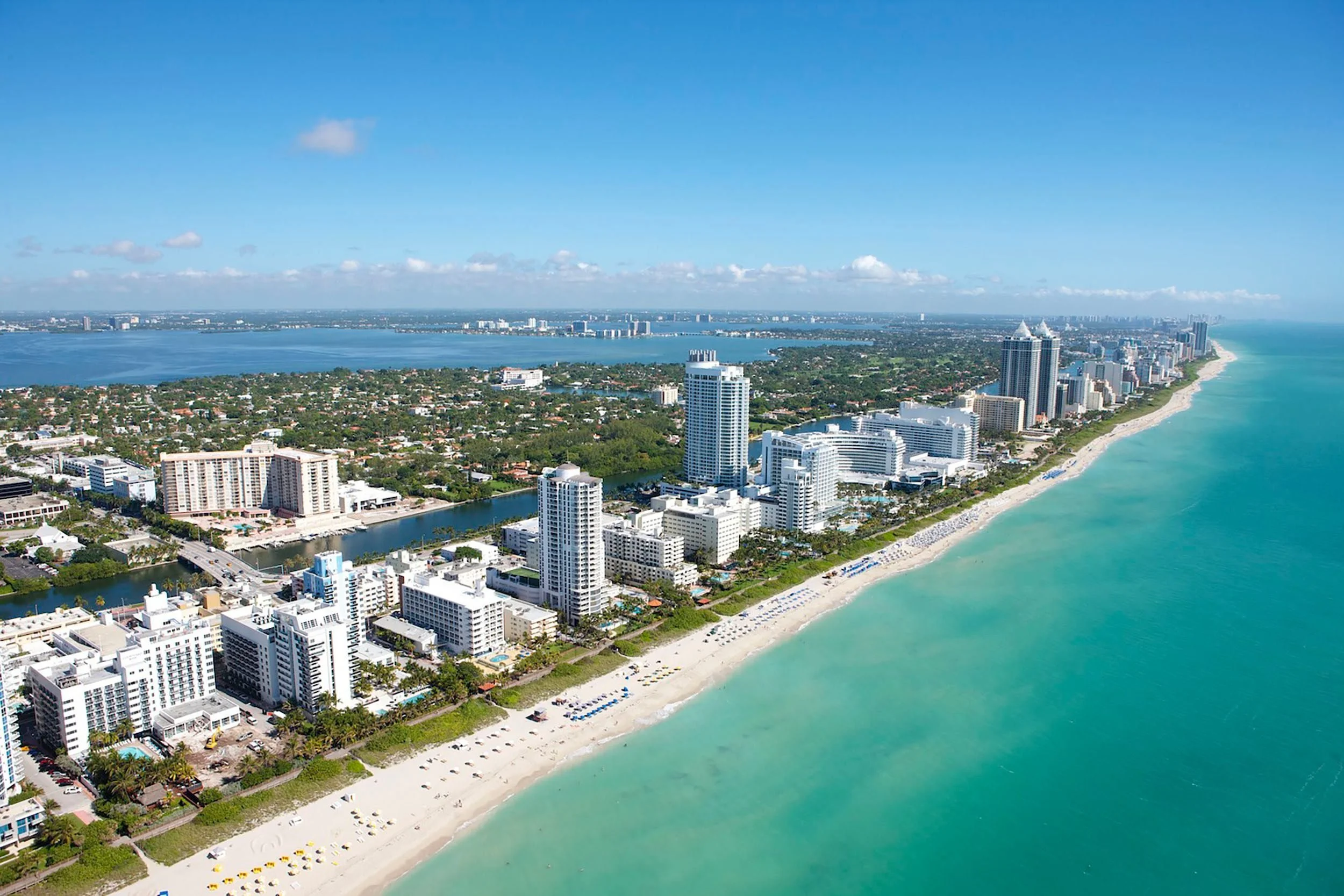
Few American cities inspire as much comparison as Miami and New York, not because they offer the same kind of experience, but because both have become international symbols of ambition, style, culture, dining and luxury, attracting travelers who expect a destination to feel dynamic, distinctive and worth returning to more than once. Beyond that shared global appeal, however, the two cities represent almost opposite interpretations of urban life, with New York defined by density, movement and vertical energy, while Miami expresses its luxury through light, space, water, tropical landscapes and a much stronger connection between indoor and outdoor living. For travelers deciding where to spend a long weekend, an extended stay or even part of the winter season, the better choice is rarely determined by a simple checklist of attractions, because the real difference lies in how each city makes the day feel from morning to night.
The Pace of Life Feels Completely Different
New York moves with a sense of urgency that becomes part of the attraction almost immediately, as mornings begin with commuters filling the sidewalks, neighborhoods remain active throughout the day and evenings flow naturally into theater, restaurants, cocktail bars and late-night plans that can continue long after midnight. That constant movement creates a feeling of possibility, particularly for travelers who enjoy waking up without a rigid itinerary and allowing the day to unfold through galleries, museums, shopping, dining and spontaneous discoveries made simply by walking from one neighborhood to another. Miami approaches the day more fluidly, with a pace that is still social and energetic but considerably less compressed, allowing breakfast to become a long morning, lunch to stretch into the afternoon and plans to shift easily between the beach, the pool, shopping, the water and dinner.For travelers who value both activity and the ability to retreat from it, Miami often feels more flexible because the city provides enough space to participate in its energy without being surrounded by it at every moment.
Weather Shapes the Entire Experience
One of the most immediate differences between Miami and New York is climate, particularly during the winter months when the contrast between the two cities becomes especially dramatic. New York’s four distinct seasons are part of its character, with spring bringing Central Park back to life, fall transforming the city into one of its most atmospheric periods and winter creating a completely different mood of coats, holiday lights and colder streets. Miami offers a very different kind of seasonal appeal, especially from late fall through spring, when warm afternoons, outdoor dining and time beside the water become part of everyday life rather than special events.For travelers escaping colder climates, this changes the entire nature of the trip, because days can be planned around the outdoors without requiring the same level of preparation, while mornings beside the pool and dinners on terraces create a sense of vacation that begins almost immediately.
Dining Reflects the Personality of Each City
Both New York and Miami offer extraordinary dining, although the experience of eating in each city reflects the broader personality of the destination. New York’s greatest strength is depth and diversity, with an enormous concentration of restaurants representing virtually every cuisine imaginable, ranging from tiny neighborhood institutions and specialist counters to ambitious fine-dining restaurants with international reputations. Miami’s dining scene is smaller but increasingly sophisticated, shaped by Latin American, Caribbean, Mediterranean and international influences while placing much greater emphasis on atmosphere, outdoor spaces and waterfront settings. In New York, the pleasure may lie in discovering a restaurant hidden on a side street in the West Village before walking to another bar or gallery, while in Miami the meal itself can become part of a longer afternoon or evening spent outdoors, where the surrounding setting and weather contribute just as much to the experience as the menu.
New York Rewards Walking, While Miami Rewards Space
New York remains one of the easiest major cities in the United States to experience without a car, because the subway, taxis and density of Manhattan allow travelers to move through multiple neighborhoods while spending much of the day on foot.That walkability creates a sense of spontaneity, since a morning in SoHo can turn into lunch in the West Village and an afternoon farther uptown without requiring a carefully planned route. Miami is more spread out, and moving between Miami Beach, the Design District, Brickell, Coconut Grove and Coral Gables often requires a car, driver or rideshare service, yet that broader geography creates something New York cannot easily replicate: substantial private residences, tropical gardens, waterfront neighborhoods and enough outdoor space for the accommodation itself to become part of the trip.The tradeoff is not simply convenience versus inconvenience, but rather proximity versus privacy, with New York compressing everything together and Miami giving travelers more room to breathe.
Water Changes the Way Miami Feels
Although New York is surrounded by water, its relationship with the shoreline is fundamentally different from Miami’s, where Biscayne Bay, the Atlantic Ocean and the Intracoastal shape the city’s lifestyle as much as its geography. In Miami, the water becomes part of the day rather than merely part of the view, whether that means beginning the morning with a swim, spending the afternoon on a yacht or returning to a waterfront residence in time for sunset. This creates a more relaxed luxury experience because leisure is integrated into the environment rather than added on top of it, allowing the day to move naturally between the city and the water without feeling like two separate vacations. For travelers who want a destination that combines restaurants, nightlife and shopping with genuine resort-style downtime, Miami has a clear advantage in the way those experiences coexist.
Architecture Tells Two Different Stories
New York’s architecture reflects density, history and vertical ambition, with brownstones, Beaux-Arts landmarks, Art Deco towers and contemporary skyscrapers creating a layered cityscape that rewards anyone interested in design. Miami’s architecture responds more directly to climate and landscape, with Art Deco, Mediterranean Revival and contemporary tropical design all emphasizing light, outdoor space, glass, courtyards and views. The distinction is especially visible in luxury living, because New York often defines prestige through height, address and skyline, while Miami places greater value on water frontage, privacy, gardens, terraces and the ability to move between inside and outside without interruption. Both cities are architecturally compelling, yet they express luxury in ways that feel almost entirely different.
Culture Is Deep in New York and Expanding Rapidly in Miami
New York remains one of the world’s great cultural capitals, with institutions such as The Metropolitan Museum of Art, MoMA, Broadway and an enormous network of galleries providing extraordinary depth throughout the year.Miami’s cultural identity is younger but increasingly influential, particularly through Art Basel Miami Beach, the Miami Design District, Pérez Art Museum Miami and the city’s growing relationship between contemporary art, architecture, fashion and hospitality.The difference is less about whether one city has culture and the other does not, and more about how that culture is experienced.New York offers extraordinary concentration and permanence, while Miami often blends cultural experiences into the broader lifestyle of the city, allowing art, design, dining and fashion to overlap in a way that feels more fluid and less institutional.
Nightlife Feels Different Even When Both Cities Stay Out Late
New York nightlife is defined by range, with rooftop bars, lounges, neighborhood pubs, restaurants, clubs and late-night venues spread across Manhattan and Brooklyn, while Miami’s nightlife leans more heavily into atmosphere, glamour, hotels, waterfront settings and clubs that reflect the city’s resort identity.A night in New York may involve several different neighborhoods and several different venues, while a Miami evening may begin with dinner outdoors and continue in one place for much longer, particularly when the setting itself becomes part of the attraction.For travelers who enjoy variety and constant movement, New York offers more density, while Miami appeals to those who prefer a slower, more visually driven evening where the destination and the mood are as important as the next stop.
Luxury Accommodation Reveals the Biggest Contrast
Perhaps the clearest difference between Miami and New York appears in the way each city defines luxury accommodation. In New York, the experience is typically centered around hotels, penthouses and high-end apartments where location, views and service carry most of the value, while Miami adds another category entirely through large private residences with pools, gardens, outdoor living areas and, in many cases, direct access to the water. For families, groups of friends and travelers staying longer than a few nights, that difference can be transformative because the accommodation becomes part of the experience rather than merely a place to return to at the end of the day. A private villa allows mornings, afternoons and evenings to unfold at home when desired, giving guests the ability to be together without sacrificing privacy.
Featured Stay: Villa Petra
For travelers who want to experience the spacious, residential side of South Florida, Villa Petra by Avali Villas offers a compelling contrast to the compact hotel and apartment lifestyle more commonly associated with New York.Located in Fort Lauderdale, the residence sits on an approximately 18,000-square-foot property and offers six bedrooms, five full bathrooms and one half bathroom, accommodating up to 16 guests across approximately 5,000 square feet of interior living space.The home has been designed around an open-concept layout where the kitchen, dining and living areas connect naturally, creating an environment that works especially well for families and groups who want to spend meaningful time together rather than separating into individual hotel rooms. Upstairs, two expansive primary suites provide additional privacy, while the lower level includes three more guest bedrooms and another full bathroom, allowing larger groups to share the same residence without making the experience feel crowded. Outdoor dining, barbecue facilities, waterfront access, an office and private parking further emphasize the contrast between South Florida luxury and the more vertical, space-conscious experience of New York, while the broader setting encourages guests to spend as much time at the residence as they do exploring the city. With rates currently starting from approximately $1,850 per night, Villa Petra illustrates one of the most compelling advantages of a Miami or South Florida stay: the ability to exchange multiple hotel rooms for one private residence where dining, relaxing and spending time together all happen under the same roof.
Space Changes the Psychology of the Trip
One of the most noticeable differences between the two destinations is not simply the amount of space available, but the way that space changes how travelers behave during the day. New York encourages visitors to remain outside their accommodation, moving constantly between neighborhoods, restaurants, shops and cultural institutions, while Miami allows the home itself to become one of the destinations.An afternoon spent beside a private pool, a chef-prepared dinner or several hours on a terrace can feel every bit as valuable as a reservation elsewhere in the city, which gives the itinerary far more flexibility and often makes longer stays feel less exhausting.This distinction becomes especially important for families or groups traveling together, because not every day needs to be filled with activities for the trip to feel worthwhile.
Shopping Offers Two Different Kinds of Luxury
New York remains one of the world’s premier shopping cities, with Fifth Avenue, Madison Avenue, SoHo and major department stores offering exceptional range across fashion, jewelry and design. Miami’s luxury retail scene is more concentrated, particularly around the Design District and Bal Harbour, where shopping is often paired with architecture, art, restaurants and outdoor spaces that make the experience feel less transactional and more leisurely. The distinction mirrors the cities themselves, because New York offers extraordinary density and selection, while Miami provides a more relaxed environment in which the shopping can become part of an entire afternoon rather than the sole purpose of the outing.
Miami Makes It Easier to Slow Down
For travelers who want every day to feel full, New York remains difficult to match, because the scale and density of the city create an endless supply of possibilities and discoveries. Miami becomes especially appealing when the goal is different and the traveler wants to balance activity with genuine downtime, allowing the morning to be spent at the beach, the afternoon beside the pool and the evening around one memorable dinner rather than several separate plans. This does not mean Miami lacks energy, but rather that the city gives visitors greater control over when they participate in that energy and when they step away from it.That flexibility can be one of the most luxurious aspects of the destination, particularly during longer stays.
New York Rewards Constant Discovery
Where Miami excels at relaxation, New York excels at reinvention, with entire days capable of unfolding through different neighborhoods, cuisines, galleries and shops without any formal plan.The density of the city creates a feeling that something interesting is always nearby, and for travelers who enjoy walking, discovering and changing plans as the day develops, New York remains one of the most rewarding cities in the world.The tradeoff is energy, because the same intensity that makes the city exciting can also make it demanding, particularly over longer stays.For many travelers, this is precisely why Miami can feel so appealing afterward.
Which City Is Right for You?
The answer depends less on which city is objectively better and more on what kind of experience the trip is meant to create. New York is ideal when the priorities are culture, theater, walkability, culinary depth and the energy of a city that constantly offers something new, while Miami becomes especially appealing when the priorities shift toward sunshine, space, outdoor living, water and the ability to combine sophisticated city experiences with genuine relaxation.For many travelers, the most satisfying choice is not choosing at all, because the two destinations complement each other remarkably well and can easily become part of the same seasonal lifestyle.A few days of restaurants, galleries and theater in New York can transition naturally into a longer stay in Miami, where the schedule slows, the weather changes and the rest of the trip unfolds around the water.
Two Cities, Two Definitions of Luxury
New York and Miami ultimately represent two very different versions of the same idea, with one defining luxury through access, density and cultural depth while the other defines it through privacy, space, climate and ease. In New York, luxury often means being close to everything, while in Miami it often means having enough room to step away from everything whenever you choose.Avali Villas offers a curated collection of luxury residences throughout Miami and South Florida, together with personalized concierge services that can include private chefs, yacht charters, transportation, wellness experiences and customized itineraries.For travelers accustomed to New York’s intensity, Miami does not need to compete with it, because the appeal lies in offering something entirely different: a place where open water replaces crowded sidewalks, private outdoor space replaces vertical density and the pace of the day finally leaves enough room to simply enjoy where you are.